
Social Etiquette and Manners in the Victorian Era

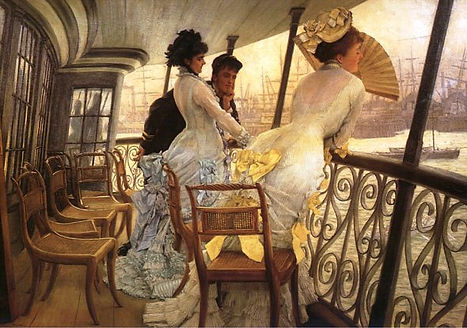
If you had lived during the Victorian British Empire, you would have been expected to follow many highly detailed rules of social behavior, from the exact depth of a courtesy to the precise colour of gloves you should wear. A single stumble would permanently damage your reputation in high society circles.
This obsession with etiquette wasn't just about being proper and polite; it was really a sophisticated social gatekeeper used by the upper class. As the Industrial Revolution churned out new millionaires from within the middle class, the established aristocracy used these extremely complex manners to close ranks. Anyone who breached an unwritten rule of etiquette was instantly exposed as an outsider.
For a true Victorian, society manners were a performance of morality, status, and self-control that governed every waking second of their lives. Thankfully, we no longer have to worry about the shocked disapproval of our companions if we use a dinner fork to eat our dessert.
The Rise of the Victorians
Throughout the late 1700s and early 1800s, known as the Regency era, the British monarchy was mired in the extravagance, debt, and indiscretions of King George IV and King William IV. But when demure eighteen-year-old Victoria took the throne in 1837, there was an immediate social shift toward duty and decorum. This shift helped stabilize a nation that was in the middle of industrial upheaval and worldwide empirical expansion.
Queen Victoria was a moral focal point that her subjects were eager to emulate. Under her influence, society was transformed from grand Regency excess into a model of middle-class virtue. Respectability was now the ultimate social currency for every ambitious household in the British Empire.
How to be a Proper Lady (or Gentleman)
Mastering the Victorian social code required a rigorous education. For the elite, this invisible manual was drilled into them from their earliest days, first by governesses and later at boarding schools.
But for the middle class who were desperate to climb the social ladder, learning the rules required study. Mass-produced etiquette manuals were bestsellers in this era, with detailed instructions on everything from the art of conversation to the correct way to tip a hat.
These manuals would be full of helpful information such as:
Introductions and Greetings
A gentleman must never presume to bow to a lady until she has first acknowledged him with a slight inclination of the head. Should she choose to look away, the gentleman must pass by as if he were a stranger.
When presenting two parties, the inferior in social station must always be presented to the superior. For example, a younger person is presented to an elder, and a gentleman is always presented to a lady.
A bow is not a mere duck of the head, but a graceful movement from the waist. It should be performed with a calm dignity—neither too hurried, which suggests agitation, nor too low, which suggests a theatrical servility. The hat must be removed entirely if a gentleman stops to speak, and held in the hand until the lady indicates the conversation is at an end.
Reserved for those of equal rank or intimate friendship, the handshake must be firm but brief. A gentleman should never offer his hand to a lady first; he must wait for her to extend hers. To squeeze the hand or to shake it with excessive vigor is considered a sign of a coarse and unrefined nature.
Social Calls
Despite the name, a "Morning Call" should never take place in the actual morning. Proper visiting hours are strictly between 3:00 PM and 5:00 PM. A formal call should last no less than fifteen minutes and no more than thirty.
Keep the conversation light and cheerful. Never discuss politics, religion, or the price of household goods. When the allotted time has passed, rise, offer a brief closing remark, and depart. A gentleman should back out of the room slightly to avoid turning his back fully on the ladies present.
If the mistress of the house is not at home, you must leave your calling card with the servant. A lady leaves one card for the mistress; a gentleman leaves one for the mistress and one for the master of the house.
Formal Dining
The host leads the way with the lady of highest rank, while the hostess follows last with the gentleman of highest rank. A gentleman must offer his left arm to the lady he is escorting.
The table will be laid with an array of cutlery. The golden rule is simple: work from the outside in with each course. Never, under any circumstance, use your own spoon to serve yourself from a communal dish.
Conversation is not a free-for-all. For the first half of the meal, you must converse exclusively with the person seated to your right. At a signal from the hostess, all guests must shift their attention to the person on their left.
To eat with gusto is considered animalistic. One should eat sparingly, as if the food is merely a secondary distraction to the refined conversation.
Once the dessert is cleared, the hostess will catch the eye of the lady of highest rank and rise. This is the signal for all ladies to withdraw to the drawing room for coffee, leaving the gentlemen to their cigars and political talk.
Dress and Accessories
A lady or gentleman must dress according to the hour and the occasion. To wear a morning dress to a dinner party is a gross insult to the hostess, suggesting you do not value her invitation. Conversely, to wear low necklines and jewels before sunset is considered flashy and theatrical.
For ladies, gloves are the ultimate barrier of refinement. They must be worn in the street, at church, and during a ball. A gentleman never shakes a lady's hand with a bare palm unless he is a close relative.
For gentlemen, the hat is a tool of communication. It must be lifted when passing a lady of one’s acquaintance, and removed entirely when entering a building or stopping to speak. To keep one’s head covered in the presence of a lady is the mark of a cad or a person of no education.
After the loss of a husband, a widow must wear Deep Mourning—entirely dull black silk and crape—for a full year and a day. To introduce a hint of color, such as lavender or grey (Half-Mourning), too early is to signal a lack of heart and a disregard for the sanctity of the family.
The End of an Era
Queen Victoria died in 1901, and her successor, King Edward VII, was the opposite of Victorian restraint—a sporting enthusiast who enjoyed gambling, racing, and socializing. Once again, the reigning monarch set a new tone for British society.
As the 1900s progressed, the suffrage movement, increased public education, and even the popularity of the bicycle gave the younger generation a new level of physical and social mobility. It was hard to maintain strict rules when both men and women from different walks of life were increasingly participating in the public workforce and political spheres. The last walls of the Victorian social code crumbled with the onset of the First World War, as the sheer scale of the tragedy and sacrifice blurred traditional class lines forever.


Comments